

Farming in Medieval Dynasty can start to take up a lot of your time as your fields expand.
Whether you want to play primarily as a farmer or not, it can help to automate it to a degree, so you have free time to take care of the rest of your village.
In this survival guide, we’ll show you how to automate farming in Medieval Dynasty.
1. Find Farming Workers
Before you can start automating your farm, you’re going to need workers to do the work for you.
Take some time visiting the villages around you to find villagers who express a desire in farming.
They’ll typically say thing like how they like working in the fields or that it’s a complex job.
These workers are great for all areas of farming like working in the fields, making items in the barn, and taking care of your animals.
Once you have some farmers, you need to assign them to correct homes.
The houses should be close to your fields because the workers won’t be able to actually take care of your fields until they’re physically there.
If they have to travel across the village just to get to the fields, then that’s time spend not working.
I typically put my farmers right off the edge of the fields.
2. Buy Pigs and Assign Workers in Pigsty and Barn
Before you become ready to automate your farm, you’re going to need a few resources going toward to the farmers.
The first thing you should do is build a pigsty and buy some pigs.
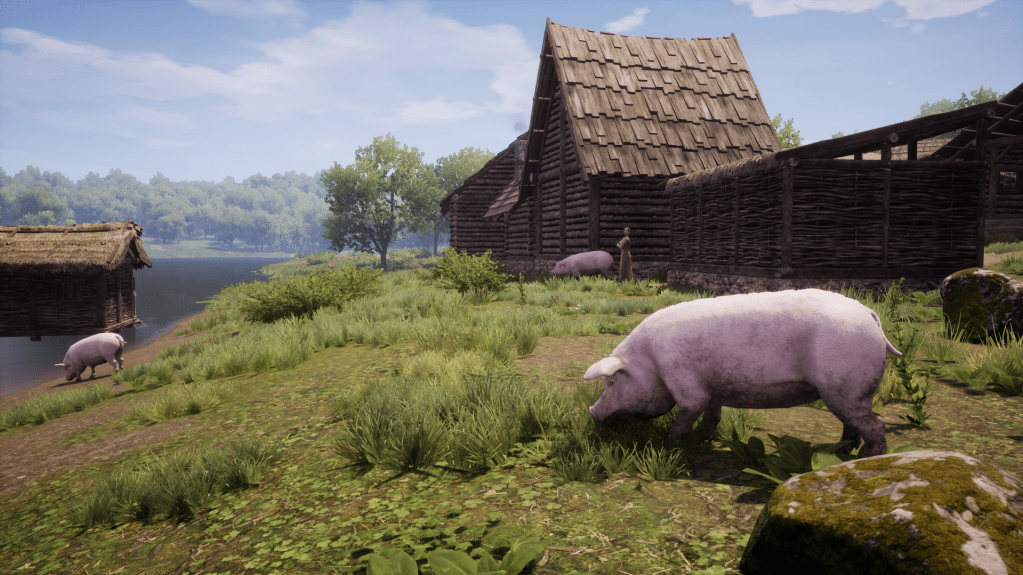
Pigs are helpful for producing manure which you can use to make fertilizer.
You’ll need one farmer assigned to the pigsty to gather as much manure as possible each day.
You’ll need another farmer in the barn making that manure into fertilizer for your farmers to use in the fields.
The bigger your fields are, the more fertilizer you’re going to need.
3. Build the Blacksmith and Sewing Hut
The main tools your farmers use in the fields are hoes, sickles/scythes, and bags.
If you don’t want to constantly make those items yourself for them, then you’re going to need to make a Blacksmith and Sewing Hut.
You’ll also need to find workers to fill these positions.
The workers for these positions are crafters.
You’ll need to find villagers who talk about their love for crafting or producing goods.
Once you have them, set them to produce hoes, sickles or scythes, and bags.
Your farmers will take out the tools they need as necessary.
4. Plant the Fields
With all the resources ready to support your farmers, you’re ready to start working on the fields, themselves.
You can make as many fields as you like, but it’s a good idea to have a few field sheds around the area.
Each field shed can only cover so much land before it becomes inefficient.
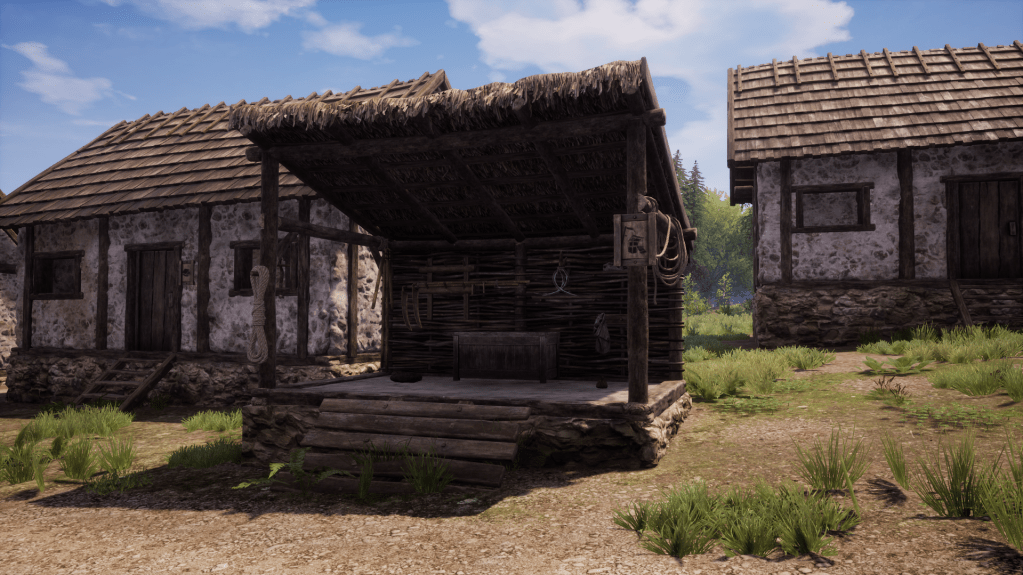
A good rule of thumb is to put a field shed on each side of your farming area.
Then assign a few farmers to each one.
They’ll be able to cover the farming area, as a whole, far more efficiently.
It’s also not a bad idea to put the farmers’ houses close to the shed where they work.
Once you have the sheds down, you can start laying down fields.
If there are any trees in the area, then you’ll need to cut them down before laying down a field.
Your workers will start grubbing and fertilizing the fields.
Now, they won’t start sowing the field until they know what you want there.
You can either manually sow the field yourself the first time, then they’ll sow it each year after that.
Or you can tell them to sow it right from the start through your Management system.
Hit the Management tab and go to your fields.
If you click on one, you’ll have a menu pop up that shows the type of plant growing on that field.
You can edit it and click and drag the type of crop you want planted there by pressing “C” on the keyboard.
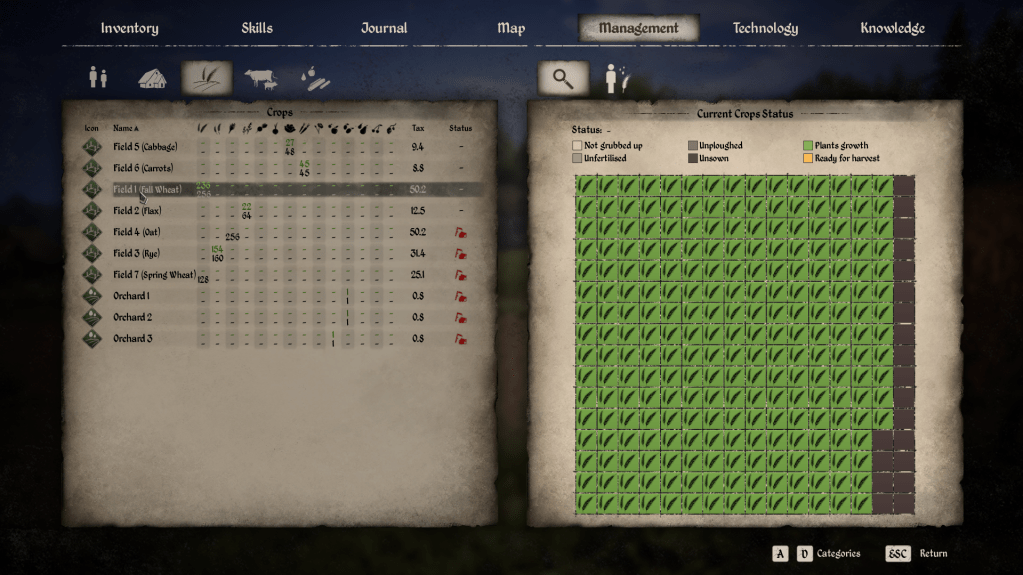
The workers will immediately start sowing that seed provided it’s the right season.
You can also press “H” on the keyboard to rename a field.
I usually rename it to the type of crop I have growing there for ease of organization.
With your fields assigned and resources coming in to give your farmers the tools they need, all of your inputs are now automated.
5. Build Workshop, Well, and Kitchen for Outputs
While you can sell your crops straight from the fields, to earn the most money, you’re going to want to cook them into items.
To do that, you’ll need a kitchen, but the worker in the kitchen will need some items beside food to create dishes.
This is where the workshop comes into play.
Place a worker in the workshop and have them craft items like plates, bowls, and buckets.
Then place a worker on the well and have them make buckets of water.
The worker in the kitchen can then take those items to craft various food dishes and baked goods.
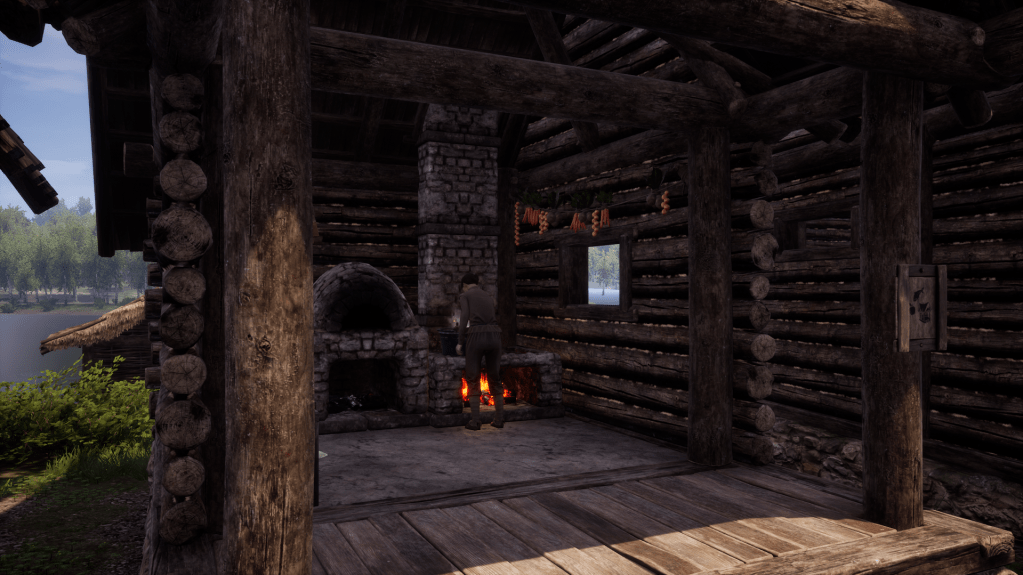
You’ll also need flour to make baked goods, so you’ll need someone in the barn or windmill to make flour.
With your kitchens working full blast, you’ll have tons of food to eat or sell.
More importantly, this automates the output section of your farm.
Conclusion
Automating your farm requires some buildings and time, but it is possible.
Watch the video below for an even more in-depth guide to automating your farm.




 Survival Game Guide
Leave a comment